

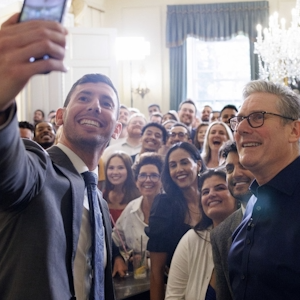
Last week, in a move that raised more eyebrows than a Love Island recoupling, Prime Minister Keir Starmer opened the doors of Number 10 Downing Street. This wasn’t to the usual press pack, but to around 70–90 influencers. Yes, you read that right – I was shocked to see TikTokers, YouTubers, and Instagrammers hanging out where Winston Churchill once plotted strategy. Welcome to politics in 2025!
It might seem like a strange crossover between politics and social media, but this event actually highlights a major shift in how governments communicate with the public. Here’s why this matters and what it tells us about the future of PR and political messaging.
Government communication
Gone are the days when a stern press briefing or a TV interview was enough to capture public attention. These days, people are more likely to scroll past a news app notification but stop dead for a 15-second TikTok. By inviting influencers into Number 10, the government has finally admitted what we’ve all known for years: a WhatsApp group is not the only place people get their news anymore.
The value of influencers
Influencers are today’s trusted voices. Whether it’s the gamer with a million Twitch followers or the lifestyle vlogger who can sell out a skincare line overnight, their reach is undeniable. For governments, this means access to audiences who probably can’t remember the last time they watched the six o’clock news. And let’s be honest, if a relatable influencer makes politics feel a bit less stuffy, that’s a win for engagement.
Accountability
Of course, it’s not all selfies and hashtags. Influencers aren’t journalists, and the same rules do not bind them. Will the message be accurate? Will tough questions be asked? Or will it all just be a glorified photo op for Instagram Stories? The line between genuine engagement and a political PR stunt can get blurry very fast.
So, what can we take away from this mash-up of politics and TikTok?
Don’t put all your eggs in the newspaper basket – audiences live on multiple platforms. It’s also very important to work with influencers whose values and followers fit your mission (no point asking a meme account to promote your sustainability report). And remember, just because it’s not traditional media doesn’t mean there won’t be scrutiny.
The Downing Street influencer reception might feel like a strange crossover episode, but it’s also a glimpse of the future of communications. Whether you love it, loathe it, or just want to know if Number 10 has good lighting for TikToks (spoiler: probably not), one thing’s clear: influencers are now helping shape public discourse.
For us in PR, it is a reminder to keep evolving or risk being left behind in someone’s feed.
Contact us to explore how we can shape your PR communications strategy.